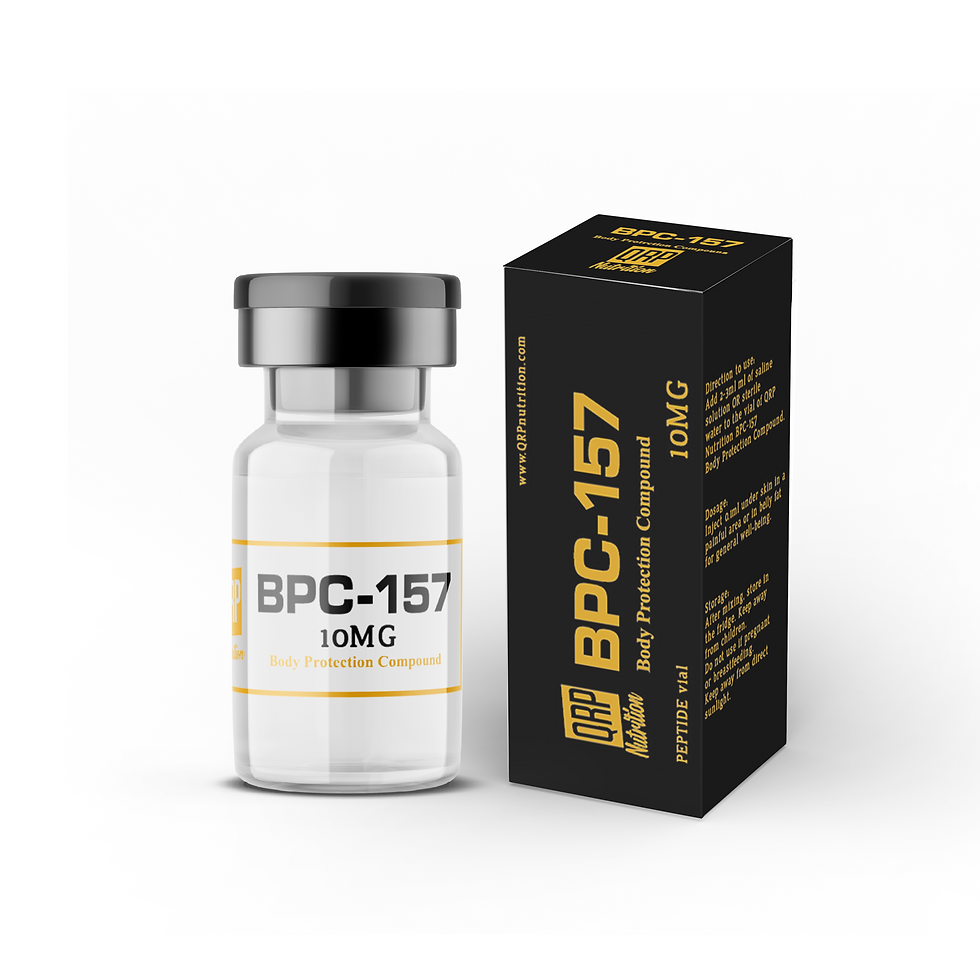
QRP Research GLOW 70mg – BPC-157 / TB-500 / GHK-Cu
QRP Research GLOW 70mg is a multi-peptide research formulation combining BPC-157, TB-500 and GHK-Cu in a single lyophilised research blend.
Each component has been investigated independently across different areas of experimental biology, including cellular signalling, cytoskeletal dynamics, extracellular matrix regulation, angiogenesis-related mechanisms and copper-dependent peptide biology.
The GLOW formulation provides researchers with three distinct compounds within one research material, enabling experimental investigation of their combined behaviour and interactions under controlled laboratory conditions.
BPC-157 Research Profile
BPC-157 is a synthetic 15-amino-acid peptide that has been investigated predominantly in laboratory and preclinical models.
Experimental research has examined BPC-157 in relation to cell migration, vascular signalling, angiogenesis-associated pathways, nitric oxide mechanisms and cellular responses involved in tissue-remodelling models.
Research has also explored interactions involving VEGF/VEGFR signalling, endothelial mechanisms and extracellular matrix-associated processes.
TB-500 Research Profile
TB-500 is a synthetic research peptide associated with the actin-related region of Thymosin Beta-4 (Tβ4).
Actin is a fundamental component of the cellular cytoskeleton and is involved in cellular structure, migration, division and motility.
TB-500 and related Thymosin Beta-4-derived peptides have therefore attracted experimental interest in research involving actin dynamics, cytoskeletal organisation, cellular migration, endothelial biology and tissue-remodelling mechanisms.
Research involving TB-500 should be distinguished from studies involving full-length Thymosin Beta-4, as findings from the complete parent peptide cannot automatically be attributed to TB-500.
GHK-Cu Research Profile
GHK-Cu (Copper Tripeptide-1) is a naturally occurring copper-binding tripeptide consisting of glycine, histidine and lysine (Gly-His-Lys) complexed with copper.
GHK-Cu has been extensively investigated in experimental models involving copper-dependent cellular signalling, extracellular matrix biology, collagen-associated mechanisms and gene-expression regulation.
Scientific research has also examined its relationship with fibroblast activity, extracellular matrix components, metalloproteinases, oxidative processes and cellular remodelling mechanisms.
Its ability to bind copper makes GHK-Cu particularly interesting for investigating the relationship between trace-metal homeostasis and peptide-mediated cellular signalling.
Multi-Peptide Research
The GLOW formulation combines three compounds associated with different but potentially intersecting experimental pathways.
BPC-157 research has focused substantially on cellular and vascular signalling mechanisms; TB-500-related research has examined actin-associated cytoskeletal processes and cellular migration; and GHK-Cu provides a separate area of investigation involving copper-dependent signalling and extracellular matrix biology.
This combination makes GLOW particularly suitable for controlled research examining interactions between:
- Cellular migration and motility
- Cytoskeletal and actin dynamics
- Extracellular matrix regulation
- Fibroblast-associated mechanisms
- Collagen-related pathways
- Angiogenesis-associated signalling
- Endothelial-cell biology
- VEGF / VEGFR-related mechanisms
- Copper-dependent peptide signalling
- Gene-expression regulation
- Oxidative and cellular stress mechanisms
- Cellular remodelling pathways
The individual components of GLOW have substantially different research histories and mechanisms. Experimental findings involving BPC-157, TB-500 or GHK-Cu individually should not automatically be interpreted as demonstrating additive or synergistic effects of the combined formulation.
Research involving these compounds remains largely experimental and should not be interpreted as evidence of established wound-healing, anti-ageing, cosmetic, regenerative, performance-enhancing or therapeutic effects in humans.
Product Specification
Product: GLOW
Compounds: BPC-157 / TB-500 / GHK-Cu
Compound Type: Multi-Peptide Research Blend
Total Content: 70mg
Form: Lyophilised research material
Primary Research Areas: Cellular Signalling / Cytoskeletal Biology / Extracellular Matrix Research / Copper-Peptide Biology
Brand: QRP Research
Application: Laboratory and scientific research
Why QRP Research?
QRP Research supplies specialist research materials with an emphasis on quality, consistency and traceability. Products are securely packaged and clearly identified for their intended laboratory application.
Storage
Store in a cool, dry and dark environment, protected from excessive heat, direct light and moisture.
Appropriate laboratory storage procedures should be followed to preserve the stability and integrity of the research material.
Research Use Notice
FOR RESEARCH USE ONLY.
This product is supplied exclusively for laboratory, analytical and scientific research.
- NOT for human consumption or administration.
- NOT for animal consumption or administration.
- NOT a medicine, food supplement or cosmetic product.
- NOT intended to diagnose, treat, cure or prevent any disease.
- No human dosing or administration instructions are provided.
- Intended to be handled only by appropriately qualified researchers or laboratory professionals.
QRP Research GLOW 70mg is supplied strictly as a research material for non-clinical laboratory investigation
QRP Research GLOW 70mg (BPC-157 + TB-500 + GHK-Cu)
Spend More, Get More